mirror of
https://github.com/jlengrand/bugsink.git
synced 2026-03-10 08:01:17 +00:00
 e58be0018f
CASCADE was defined for keys & values, but in practice those are never directly
deleted except in the very case in which it has been established that they are
'orphaned', i.e. no longer being referrred to. That's exactly the case in which
CASCADE is superfluous.

As a result, in the test for issue deletion (which contains a prune of
tagvalue), the following 3 queries are no longer done:

```
SELECT "tags_tagvalue"."id", "tags_tagvalue"."project_id", "tags_tagvalue"."key_id", "tags_tagvalue"."value" FROM "tags_tagvalue" WHERE "tags_tagvalue"."id" IN (1)
DELETE FROM "tags_eventtag" WHERE "tags_eventtag"."value_id" IN (1)
DELETE FROM "tags_issuetag" WHERE "tags_issuetag"."value_id" IN (1)
```
Bugsink: Self-hosted Error Tracking
Bugsink offers Error Tracking for your applications with full control through self-hosting.
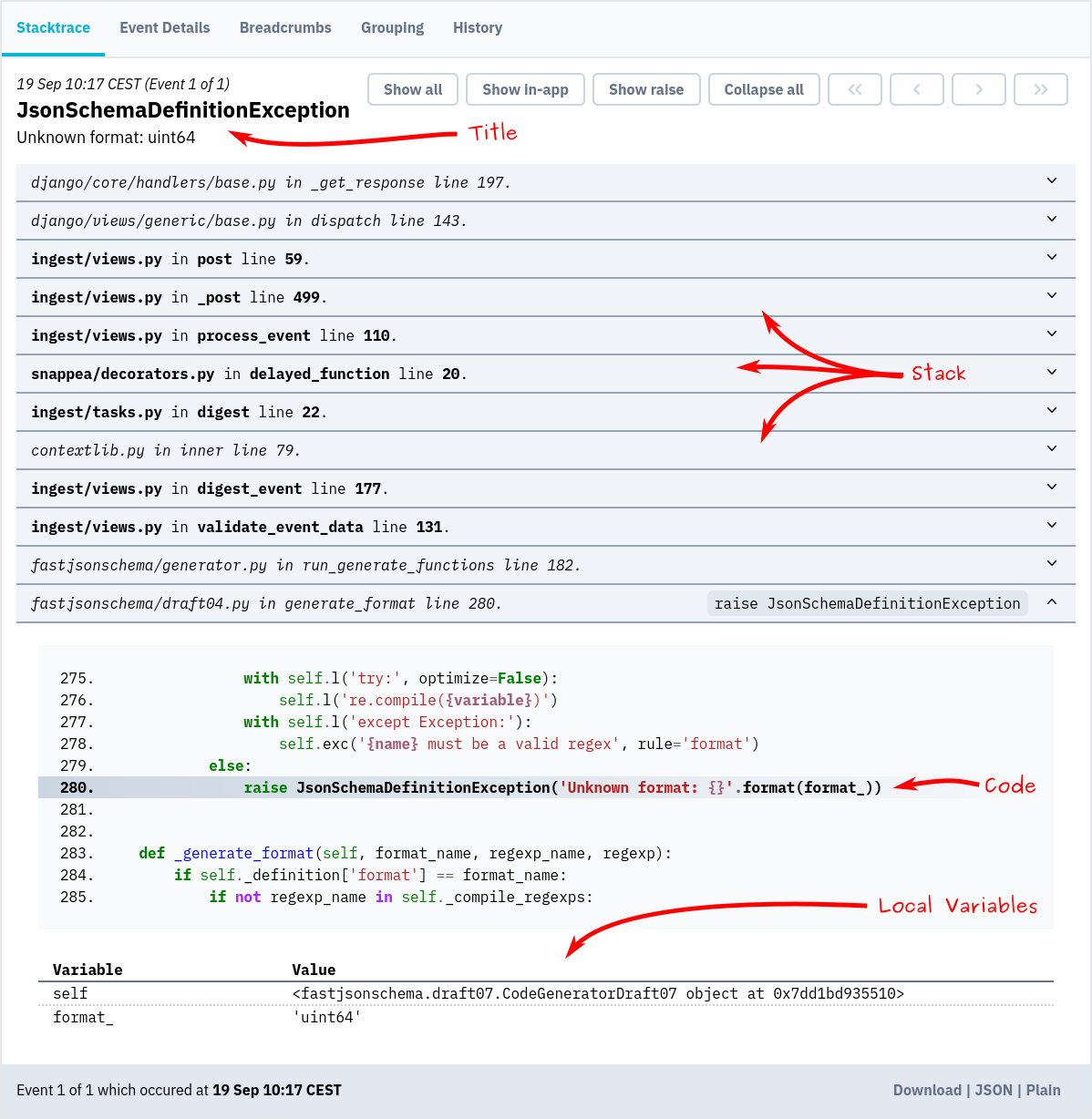
Screenshot
This is what you'll get:
Installation & docs
The quickest way to evaluate Bugsink is to spin up a throw-away instance using Docker:
docker pull bugsink/bugsink:latest

docker run \
  -e SECRET_KEY={{ random_secret }} \
  -e CREATE_SUPERUSER=admin:admin \
  -e PORT=8000 \
  -p 8000:8000 \
  bugsink/bugsink
Visit http://localhost:8000/, where you'll see a login screen. The default username and password
are admin.
Now, you can set up your first project and start tracking errors.
Detailed installation instructions are on the Bugsink website.