mirror of
https://github.com/jlengrand/bugsink.git
synced 2026-03-10 08:01:17 +00:00
 a2e1caabd1
i.e. the code in check_for_thresholds (when the `qs` filters per project)

On SQLite the effect is like so, from:

EXPLAIN QUERY PLAN SELECT COUNT(*) AS "__count" FROM "events_event" WHERE ("events_event"."project_id" = 1 AND "events_event"."digested_at" >= '2025-12-07 15:12:24.479666');
QUERY PLAN
`--SEARCH events_event USING COVERING INDEX events_even_project_ac6fc7_idx (project_id=?)

to

EXPLAIN QUERY PLAN SELECT COUNT(*) AS "__count" FROM "events_event" WHERE ("events_event"."project_id" = 1 AND "events_event"."digested_at" >= '2025-12-07 15:12:24.479666');
QUERY PLAN
`--SEARCH events_event USING COVERING INDEX events_even_project_625413_idx (project_id=? AND digested_at>?)
Bugsink: Self-hosted Error Tracking
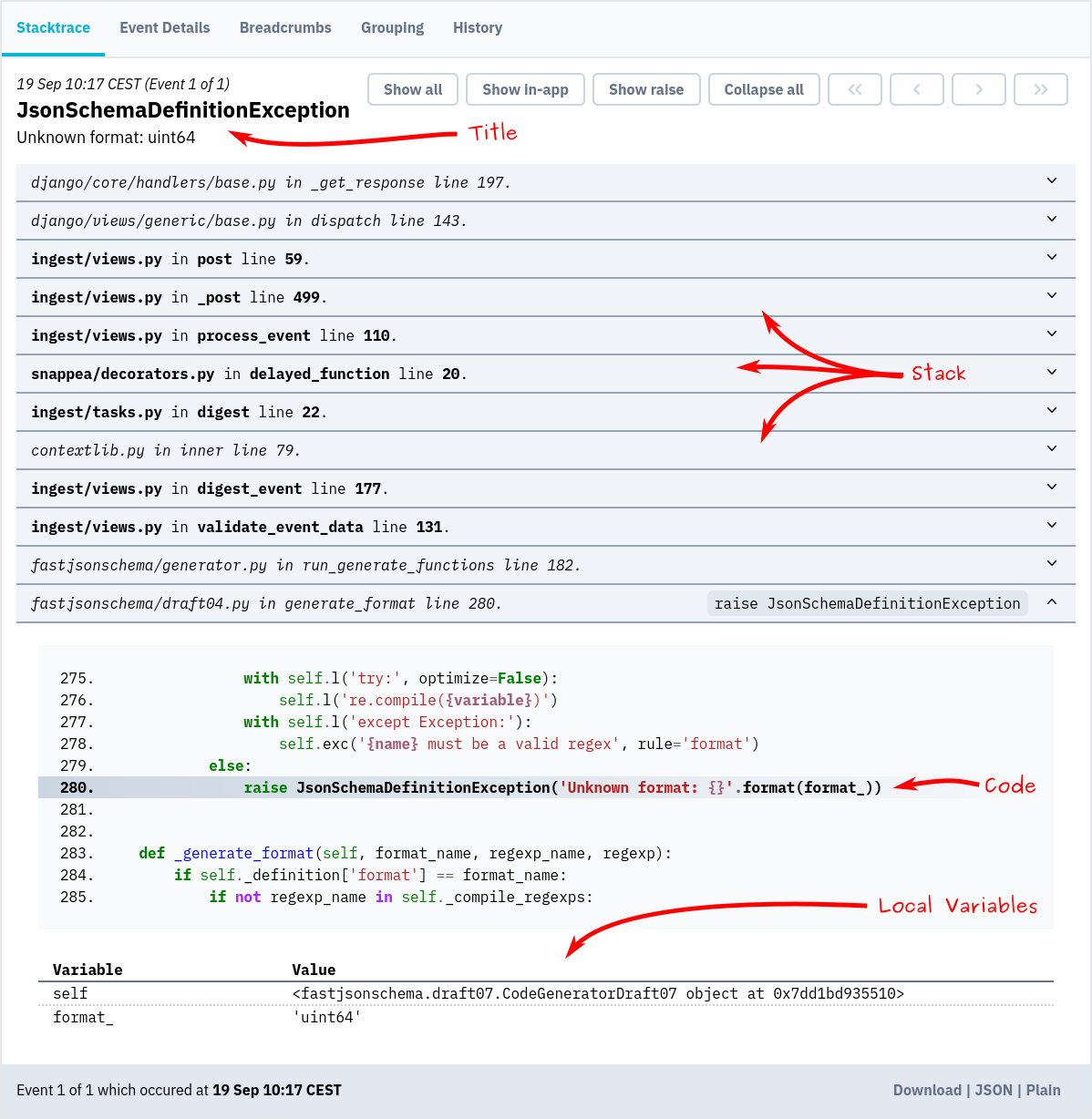
Screenshot
Installation & docs
The quickest way to evaluate Bugsink is to spin up a throw-away instance using Docker:
docker pull bugsink/bugsink:latest

docker run \
  -e SECRET_KEY=PUT_AN_ACTUAL_RANDOM_SECRET_HERE_OF_AT_LEAST_50_CHARS \
  -e CREATE_SUPERUSER=admin:admin \
  -e PORT=8000 \
  -p 8000:8000 \
  bugsink/bugsink
Visit http://localhost:8000/, where you'll see a login screen. The default username and password
are admin.
Now, you can set up your first project and start tracking errors.
Detailed installation instructions are on the Bugsink website.