mirror of
https://github.com/jlengrand/bugsink.git
synced 2026-03-10 08:01:17 +00:00
 9d8a2213ec
See #46

Being a bit more liberal w/ allowing localhost/127.0.0.1 may also
result in proxies that don't pass "Host:" correctly to fail a bit
later; this could be either good or bad; I'm assuming "bad", since
I'd rather fail early and explicitly, but I'm also assuming such
problems will not become that much harder to figure out, so I'm
accepting this.
Bugsink: Self-hosted Error Tracking
Bugsink offers real-time error tracking for your applications with full control through self-hosting.
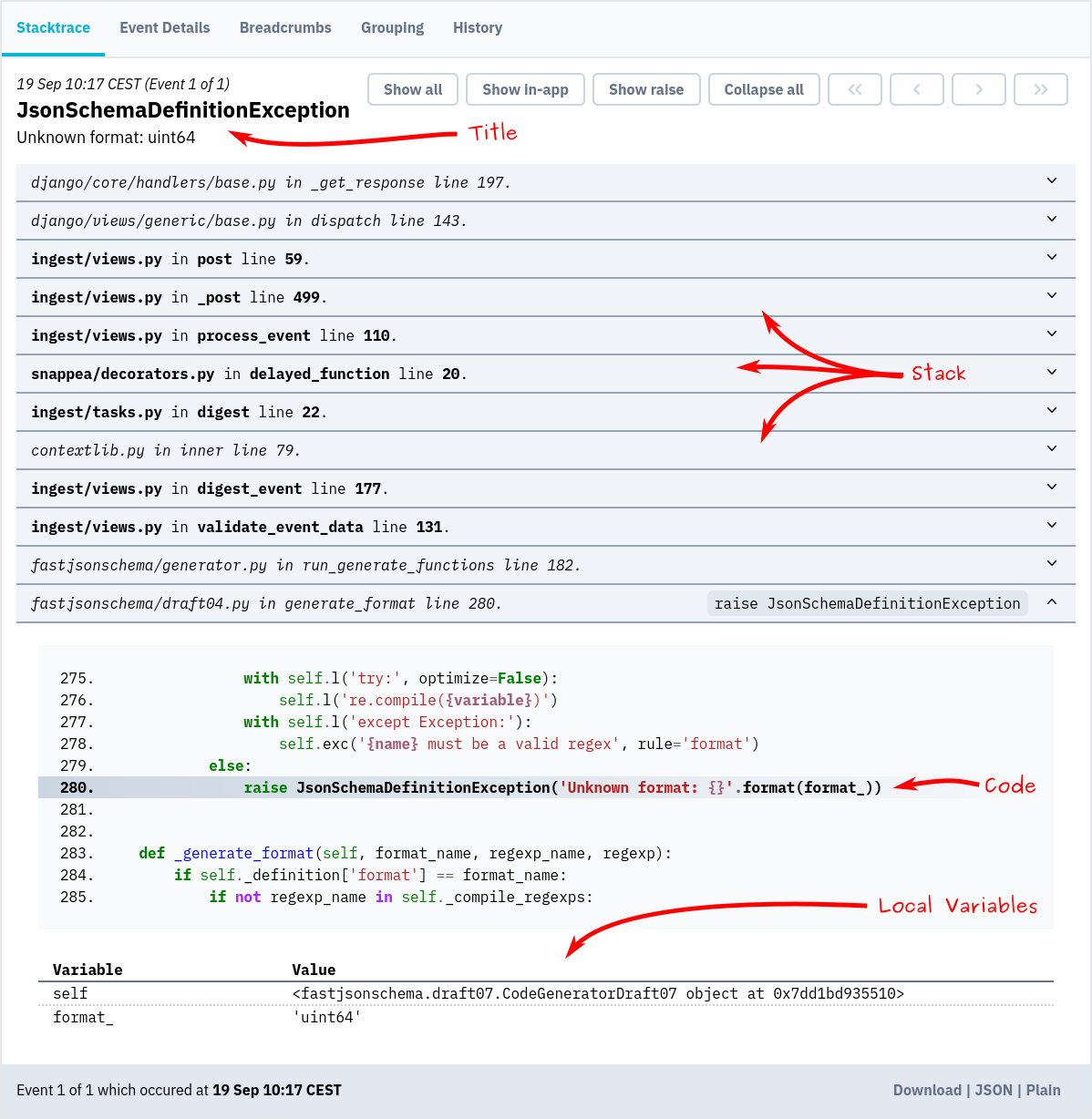
Screenshot
This is what you'll get:
Installation & docs
The quickest way to evaluate Bugsink is to spin up a throw-away instance using Docker:
docker pull bugsink/bugsink:latest

docker run \
  -e SECRET_KEY={{ random_secret }} \
  -e CREATE_SUPERUSER=admin:admin \
  -e PORT=8000 \
  -p 8000:8000 \
  bugsink/bugsink
Visit http://localhost:8000/, where you'll see a login screen. The default username and password
are admin.
Now, you can set up your first project and start tracking errors.
Detailed installation instructions are on the Bugsink website.