mirror of
https://github.com/jlengrand/bugsink.git
synced 2026-03-10 08:01:17 +00:00
 86e8c4318b
Triggered by issue_event_list being more than 5s on "emu" (my 1,500,000 event
test-machine). Reason: sorting those events on non-indexed field. Switching
to a field-with-index solved it.

I then analysed (grepped) for "ordering" and "order_by" and set indexes
accordingly and more or less indiscriminately (i.e. even on tables that are
assumed to have relatively few rows, such as Project & Team).
Bugsink: Self-hosted Error Tracking
Bugsink offers real-time error tracking for your applications with full control through self-hosting.
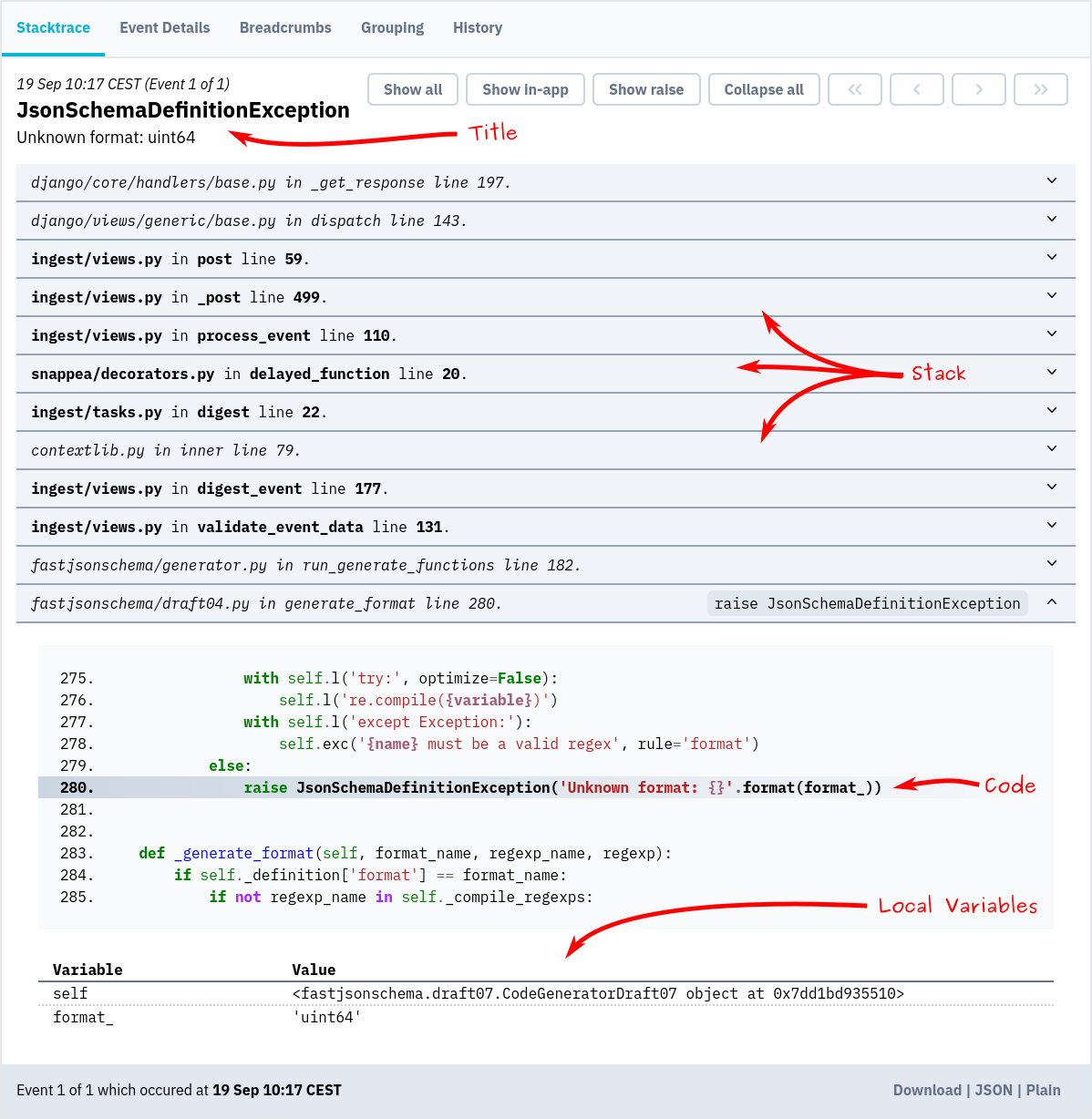
Screenshot
This is what you'll get:
Installation & docs
The quickest way to evaluate Bugsink is to spin up a throw-away instance using Docker:
docker pull bugsink/bugsink:latest

docker run \
  -e SECRET_KEY={{ random_secret }} \
  -e CREATE_SUPERUSER=admin:admin \
  -e PORT=8000 \
  -p 8000:8000 \
  bugsink/bugsink
Visit http://localhost:8000/, where you'll see a login screen. The default username and password
are admin.
Now, you can set up your first project and start tracking errors.
Detailed installation instructions are on the Bugsink website.