mirror of
https://github.com/jlengrand/bugsink.git
synced 2026-03-10 08:01:17 +00:00
 7b340fd8ff
I've done a full grep on Issue.objects, Project.objects and get_object_or_404
equivelents, and applying some common sense. The goal: avoid having
confusing/half-broken pages in the UI.

On index-usage: I've decided not to update the indexes. The assumption is:
`is_deleted` items will be a tiny minority of items in general, making the
cost/benefit analysis not turn out favorably (just scanning them out as a final
step is more efficient).  Also: sqlite is able to use the correct index without
adding a special one, proof:

```
EXPLAIN QUERY PLAN SELECT [..] WHERE ("issues_issue"."project_id" = 1 AND "issues_issue"."is_muted" = (0) AND "issues_issue"."is_resolved" = (0)) ORDER BY "issues_issue"."last_seen" DESC LIMIT 250;
QUERY PLAN
`--SEARCH issues_issue USING INDEX issue_list_open (project_id=? AND is_resolved=? AND is_muted=?)

EXPLAIN QUERY PLAN SELECT [..] WHERE ("issues_issue"."project_id" = 1 AND "issues_issue"."is_muted" = (0) AND "issues_issue"."is_resolved" = (0) AND "issues_issue"."is_deleted" = 0) ORDER BY "issues_issue"."last_seen" DESC LIMIT 250;
QUERY PLAN
`--SEARCH issues_issue USING INDEX issue_list_open (project_id=? AND is_resolved=? AND is_muted=?)
```

See #139 for the 0/1 notation in the above.

(Project-indexes: not an issue, the scale is "below relevance for indexes")
Bugsink: Self-hosted Error Tracking
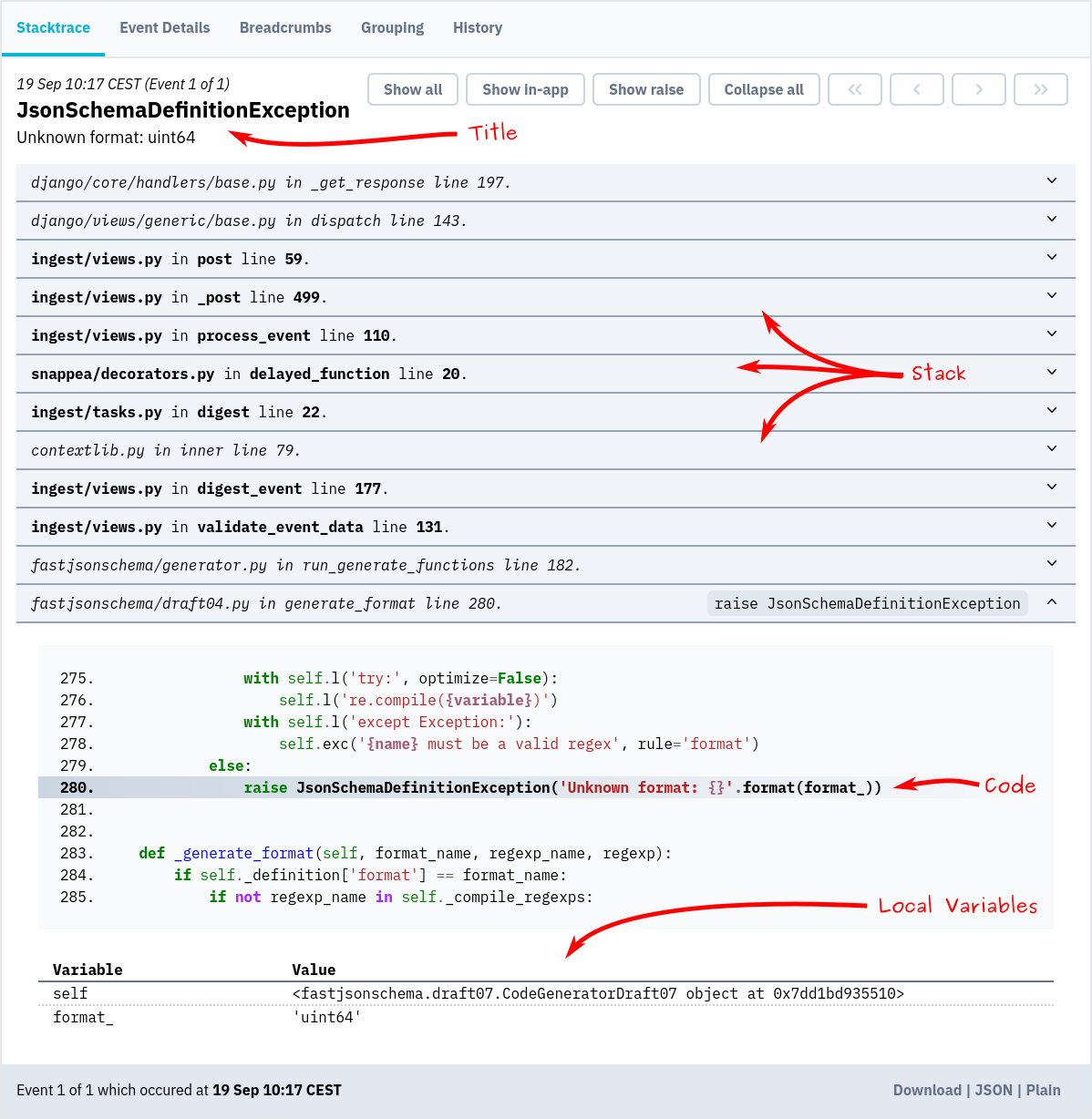
Screenshot
Installation & docs
The quickest way to evaluate Bugsink is to spin up a throw-away instance using Docker:
docker pull bugsink/bugsink:latest

docker run \
  -e SECRET_KEY=PUT_AN_ACTUAL_RANDOM_SECRET_HERE_OF_AT_LEAST_50_CHARS \
  -e CREATE_SUPERUSER=admin:admin \
  -e PORT=8000 \
  -p 8000:8000 \
  bugsink/bugsink
Visit http://localhost:8000/, where you'll see a login screen. The default username and password
are admin.
Now, you can set up your first project and start tracking errors.
Detailed installation instructions are on the Bugsink website.