mirror of
https://github.com/jlengrand/bugsink.git
synced 2026-03-10 08:01:17 +00:00
 615d2da4c8
"possibly expensive" turned out to be "actually expensive". On 'emu', with 1.5M
events, the counts take 85 and 154 ms for Project and Issue respectively;
bottlenecking our digestion to ~3 events/s.

Note: this is single-issue, single-project (presumably, the cost would be lower
for more spread-out cases)

Note on indexes: Event already has indexes for both Project & Issue (though as
the first item in a multi-column index). Without checking further: that appears
to not "magically solve counting".

This commit also optimizes the .count() on the issue-detail event list (via
Paginator).

This commit also slightly changes the value passed as `stored_event_count` to
be used for `get_random_irrelevance` to be the post-evication value. That won't
matter much in practice, but is slightly more correct IMHO.
Bugsink: Self-hosted Error Tracking
Bugsink offers real-time error tracking for your applications with full control through self-hosting.
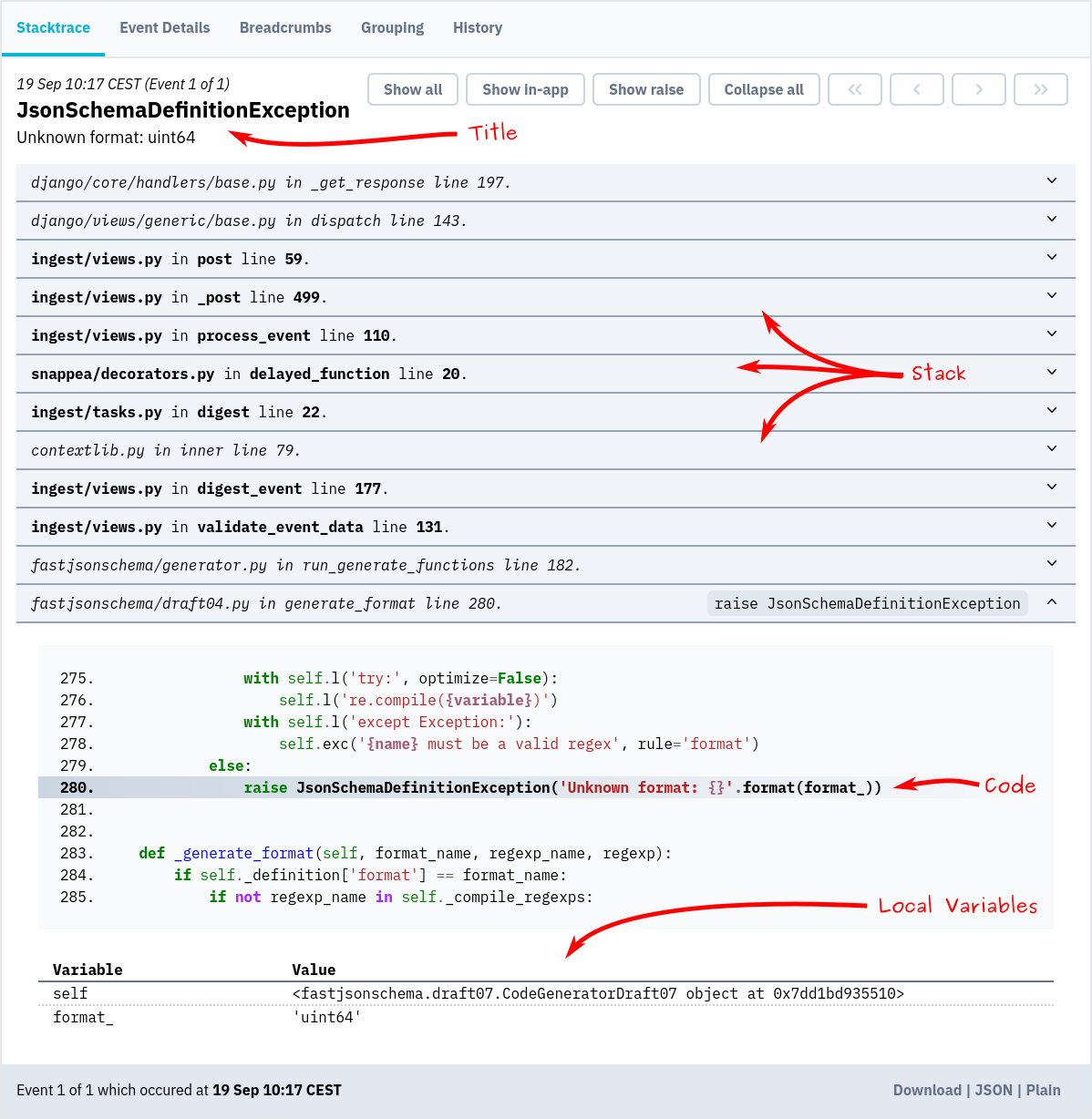
Screenshot
This is what you'll get:
Installation & docs
The quickest way to evaluate Bugsink is to spin up a throw-away instance using Docker:
docker pull bugsink/bugsink:latest

docker run \
  -e SECRET_KEY={{ random_secret }} \
  -e CREATE_SUPERUSER=admin:admin \
  -e PORT=8000 \
  -p 8000:8000 \
  bugsink/bugsink
Visit http://localhost:8000/, where you'll see a login screen. The default username and password
are admin.
Now, you can set up your first project and start tracking errors.
Detailed installation instructions are on the Bugsink website.