mirror of
https://github.com/jlengrand/bugsink.git
synced 2026-03-10 08:01:17 +00:00
 5559fba754
An (optional) way to store the `event_data` (full event as JSON)
outside the DB. This is expected to be useful for larger setups,
because it gives you:

* A more portable database (e.g. backups); (depeding on event size
  the impact on your DB is ~50x.
* Less worries about hitting "physical" limits (e.g. disk size, max
  file size) for your DB.

Presumably (more testing will happen going forwards) it will:

* Speed up migrations (especially on sqlite, which does full table
  copies)
* Speed up event ingestion(?)

Further improvements in this commit:

* `delete_with_limit` was removed; this removes one tie-in to MySQL/Sqlite
    (See #21 for this bullet)
Bugsink: Self-hosted Error Tracking
Bugsink offers real-time error tracking for your applications with full control through self-hosting.
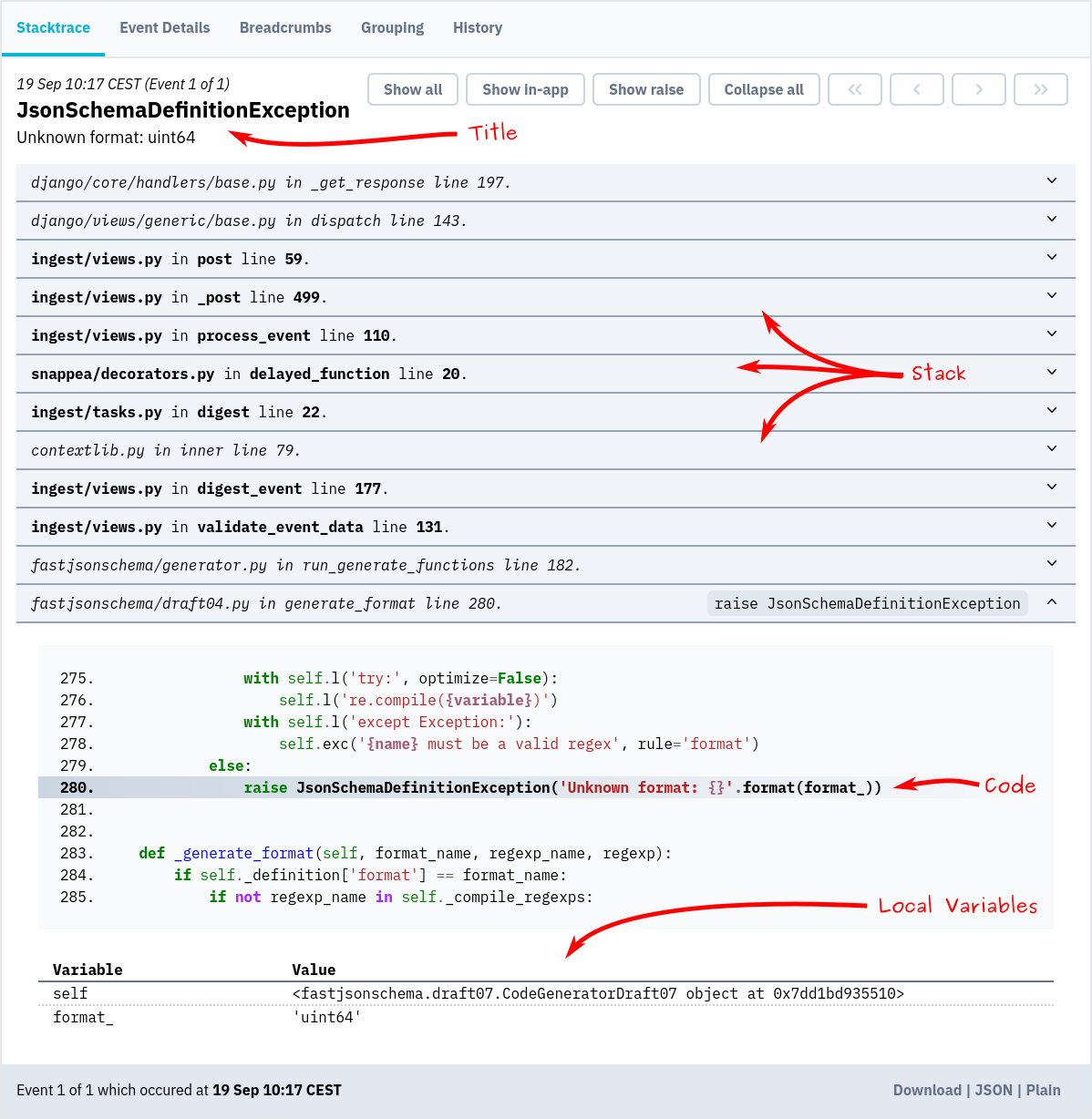
Screenshot
This is what you'll get:
Installation & docs
The quickest way to evaluate Bugsink is to spin up a throw-away instance using Docker:
docker pull bugsink/bugsink:latest

docker run \
  -e SECRET_KEY={{ random_secret }} \
  -e CREATE_SUPERUSER=admin:admin \
  -e PORT=8000 \
  -p 8000:8000 \
  bugsink/bugsink
Visit http://localhost:8000/, where you'll see a login screen. The default username and password
are admin.
Now, you can set up your first project and start tracking errors.
Detailed installation instructions are on the Bugsink website.