mirror of
https://github.com/jlengrand/bugsink.git
synced 2026-03-10 08:01:17 +00:00
 4ad3c5efcf
Defends against certain forms of local privilege escalation, i.e.
understood to be defense in depth rather than a security issue given
the recommended ways of deploying (docker container or in a single-use
single-server)

Fix #174

See https://github.com/python/cpython/pull/23901
Bugsink: Self-hosted Error Tracking
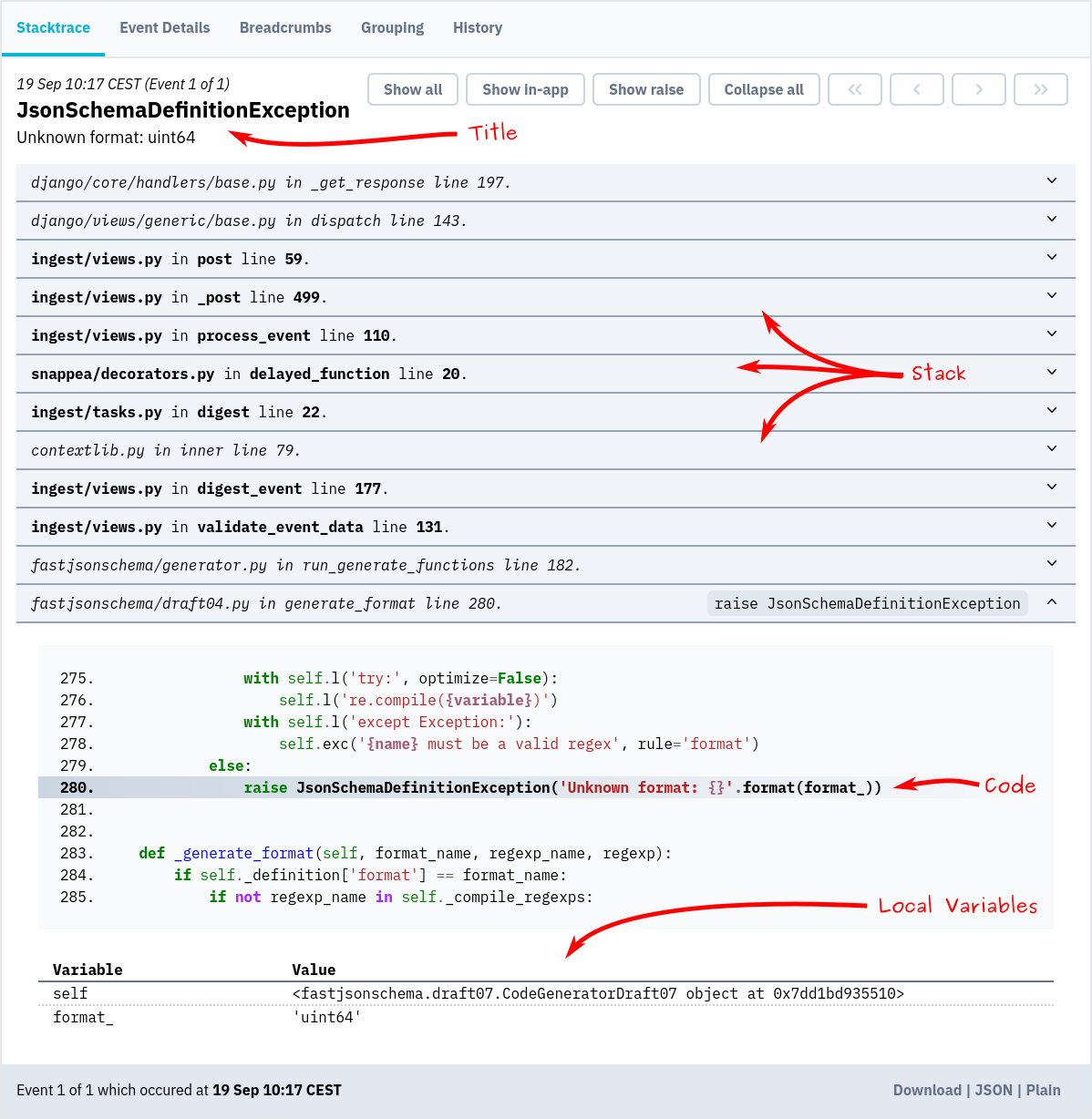
Screenshot
Installation & docs
The quickest way to evaluate Bugsink is to spin up a throw-away instance using Docker:
docker pull bugsink/bugsink:latest

docker run \
  -e SECRET_KEY=PUT_AN_ACTUAL_RANDOM_SECRET_HERE_OF_AT_LEAST_50_CHARS \
  -e CREATE_SUPERUSER=admin:admin \
  -e PORT=8000 \
  -p 8000:8000 \
  bugsink/bugsink
Visit http://localhost:8000/, where you'll see a login screen. The default username and password
are admin.
Now, you can set up your first project and start tracking errors.
Detailed installation instructions are on the Bugsink website.