mirror of
https://github.com/jlengrand/bugsink.git
synced 2026-03-10 08:01:17 +00:00
 391e22bcf0
in preparation of the minidump handling through the envelope path,
which probably requires dealing with the whole envelope as a whole.

"theoretically" this might be less efficient, but [a] see the notes
at the top of the parser on how we think about streaming parsing and
[b] the inefficiencies are in the "immediate" path anyway (which has
the assumtion that it's not in high-performance envs).

"blind commit" (tests not run against this commit).
Bugsink: Self-hosted Error Tracking
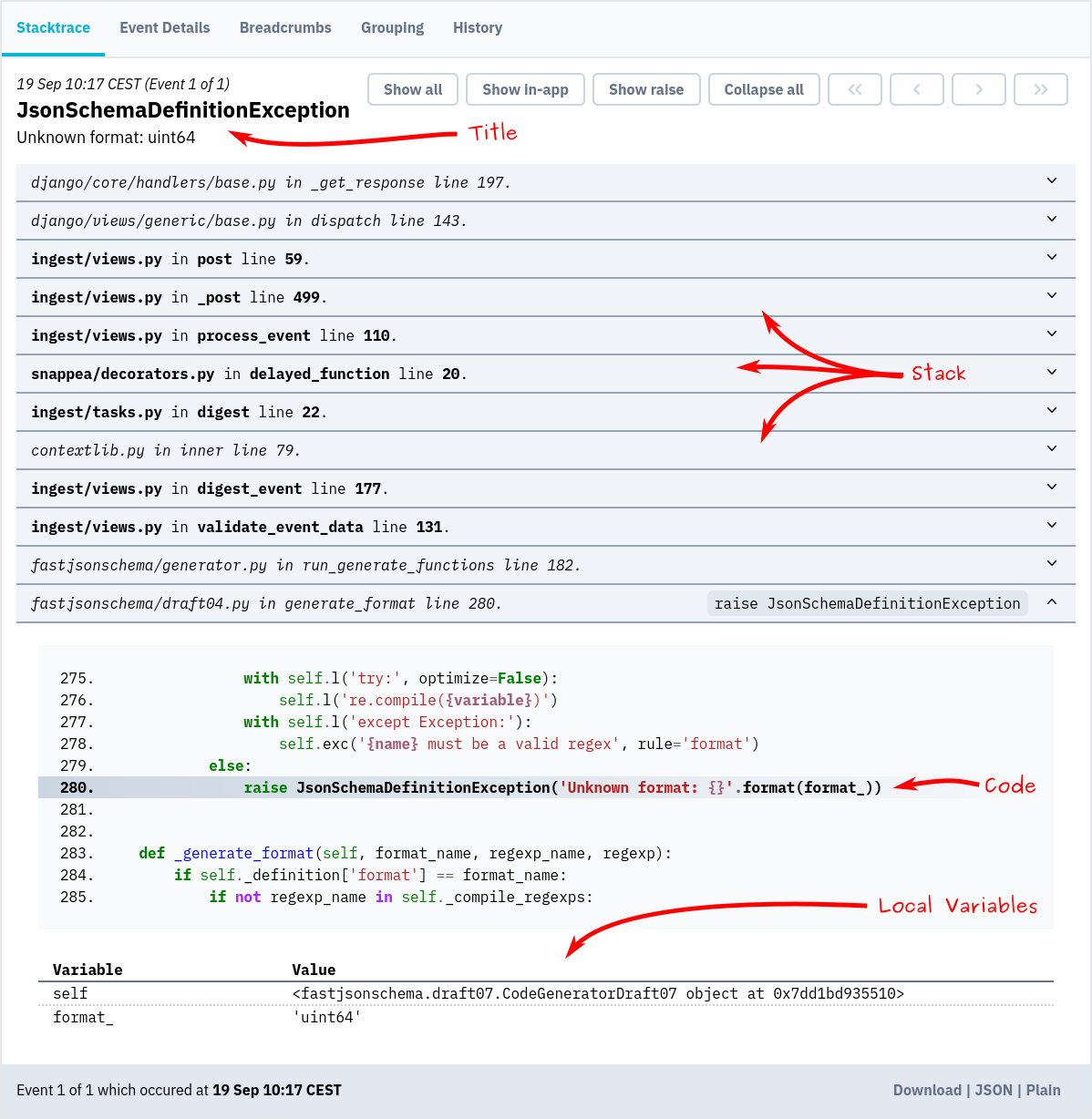
Screenshot
Installation & docs
The quickest way to evaluate Bugsink is to spin up a throw-away instance using Docker:
docker pull bugsink/bugsink:latest

docker run \
  -e SECRET_KEY=PUT_AN_ACTUAL_RANDOM_SECRET_HERE_OF_AT_LEAST_50_CHARS \
  -e CREATE_SUPERUSER=admin:admin \
  -e PORT=8000 \
  -p 8000:8000 \
  bugsink/bugsink
Visit http://localhost:8000/, where you'll see a login screen. The default username and password
are admin.
Now, you can set up your first project and start tracking errors.
Detailed installation instructions are on the Bugsink website.