mirror of
https://github.com/jlengrand/bugsink.git
synced 2026-03-10 08:01:17 +00:00
 12af5302ef
In principle, Python 3.9 has ~1 month of life in it (its own EOL).
I'm OK with that in practice for main (we haven't released Bugsink yet),
as well as considering the following overview of popular Linux distros
and their Python versions (which will have a much stronger influence
on practical Python deployment in the wild than whatever the PSF says):

Not affected:

* Ubuntu 22.04 LTS (EOL Apr 2027) has Python 3.10
* Ubuntu 24.04 LTS (EOL Apr 2029) has Python 3.12
* Debian 12 Bookworm (EOL Jun 2028) has Python 3.11
* RHEL 9 (EOL May 2032) default 3.9 but also offers 3.11 and 3.12
* The Docker image we use has Python version configurable (we use 3.12)

Affected:

* Debian 11 Bullseye (EOL Aug 2026) has Python 3.9

Given Bugsink's own age my guess is "no one's on Bullseye".
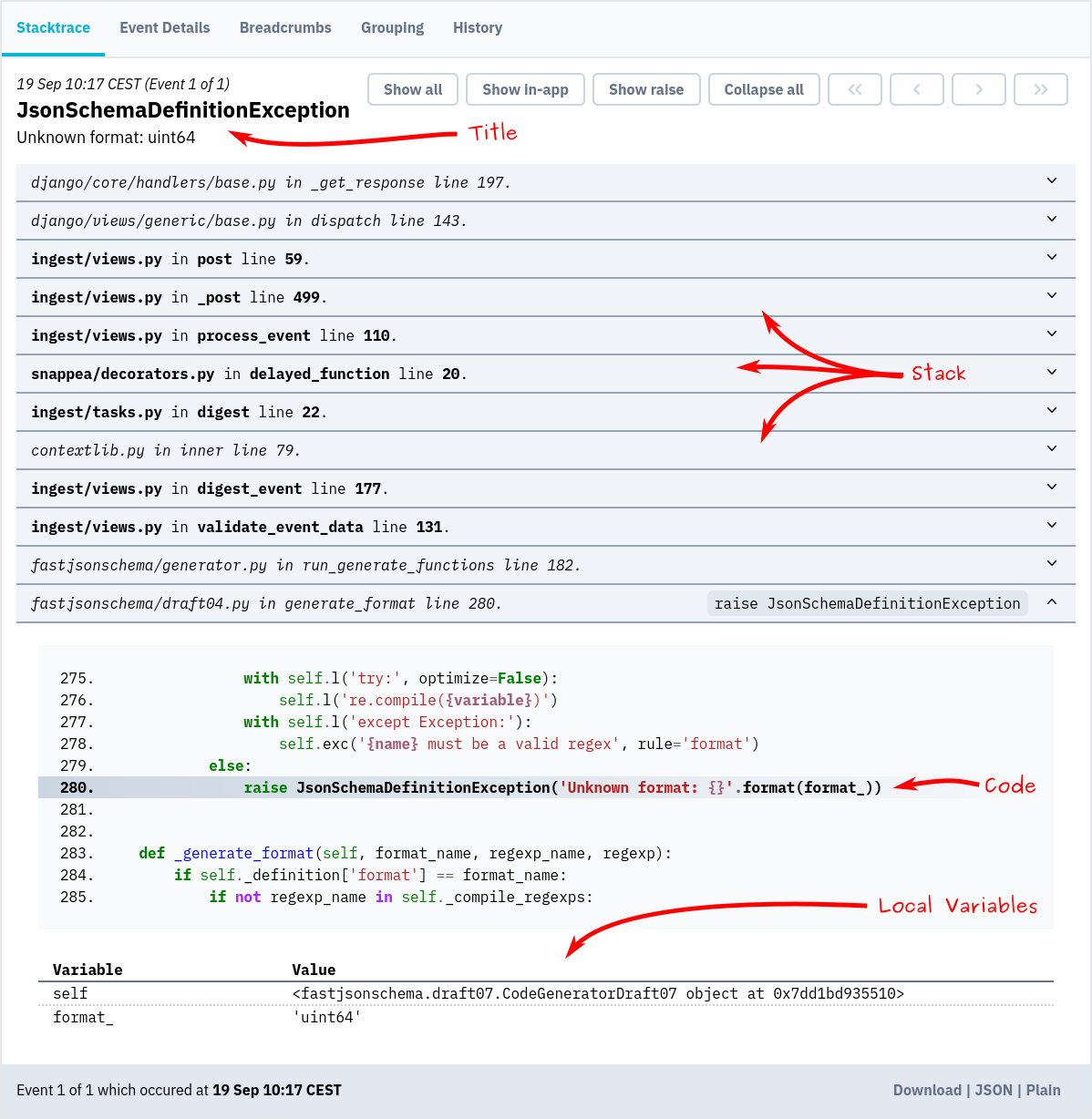
Bugsink: Self-hosted Error Tracking
Screenshot
Installation & docs
The quickest way to evaluate Bugsink is to spin up a throw-away instance using Docker:
docker pull bugsink/bugsink:latest

docker run \
  -e SECRET_KEY=PUT_AN_ACTUAL_RANDOM_SECRET_HERE_OF_AT_LEAST_50_CHARS \
  -e CREATE_SUPERUSER=admin:admin \
  -e PORT=8000 \
  -p 8000:8000 \
  bugsink/bugsink
Visit http://localhost:8000/, where you'll see a login screen. The default username and password
are admin.
Now, you can set up your first project and start tracking errors.
Detailed installation instructions are on the Bugsink website.