mirror of
https://github.com/jlengrand/bugsink.git
synced 2026-03-10 08:01:17 +00:00
 0cbdae9411
In b76e474ef1, the event-navigation was changed into the next/prev idiom (I
think completely, i.e. also from the .html files, but did not check) but the
elif structure and error message did not fully reflect that (it still talked
about digest_order/id, but nav is now one of the primary methods)

I briefly considered removing the lookup-by-digest-order-only, but I figure it
may come in handy at some point (if only for users to directly edit the url)
and did not check whether this is actually unused.
Bugsink: Self-hosted Error Tracking
Bugsink offers real-time error tracking for your applications with full control through self-hosting.
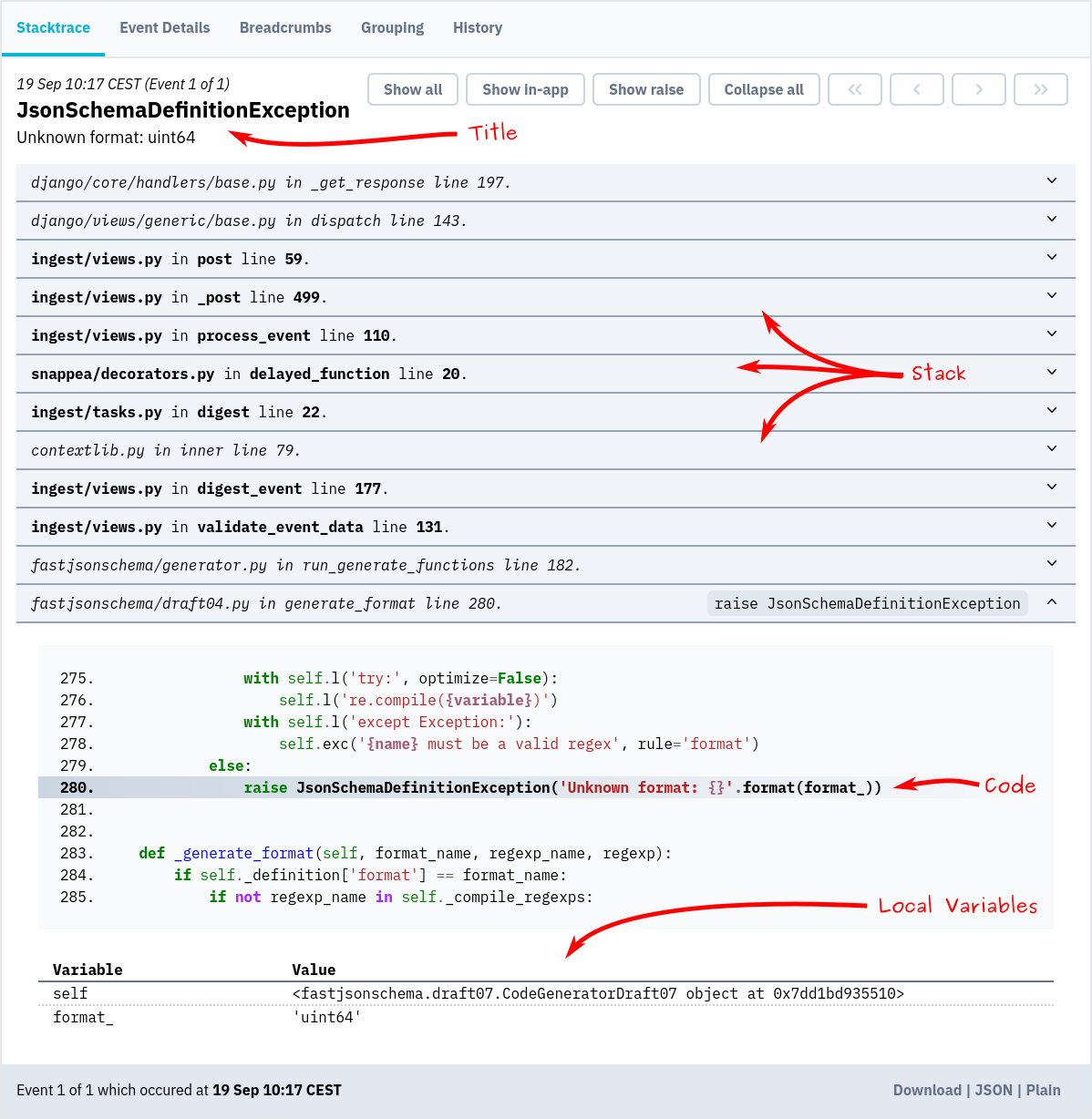
Screenshot
This is what you'll get:
Installation & docs
The quickest way to evaluate Bugsink is to spin up a throw-away instance using Docker:
docker pull bugsink/bugsink:latest

docker run \
  -e SECRET_KEY={{ random_secret }} \
  -e CREATE_SUPERUSER=admin:admin \
  -e PORT=8000 \
  -p 8000:8000 \
  bugsink/bugsink
Visit http://localhost:8000/, where you'll see a login screen. The default username and password
are admin.
Now, you can set up your first project and start tracking errors.
Detailed installation instructions are on the Bugsink website.